

Infrastructure Bill Could Be Strongest-Ever U.S. Climate Action– If Congress Acts
EI's Megan Mahajan explains why the current set of climate policies in the Build Back Better Act are unprecedented in U.S. federal policy.
Source

396 articles
EI's Megan Mahajan explains why the current set of climate policies in the Build Back Better Act are unprecedented in U.S. federal policy.
To ensure a safe, healthy world for generations to come, policymakers must accompany their ambitious targets with the concrete programs, technical support, and dedicated financing necessary to design and implement smart climate policy, with a keen focus on supporting major developing countries…

EI's Silvio Marcacci explains what's needed to achieve Colorado's vision for a state that runs on emission-free transport.

EI's Anand Gopal explains how policies to scale alternative meats could reduce global greenhouse gas emissions by 8 metric gigatons per year and are key to achieving the Paris Agreement goals.
EI's Sarah Spengeman and AGCI's Emily Jack-Scott explain new research showing how megafires are projected to result in the conversion of forest ecosystems and why forest management strategies must adapt to reduce the intensity of fires and better protect forests.
EI's Silvio Marcacci writes the Biden administration's move to phase out super-polluting hydrofluorocarbons could generate billions in new manufacturing revenue and help equalize the international trade imbalance.
EI's Mary Anne Hitt says personal losses during COVID remind us of the importance of avoiding dangerous climate change by enacting policies to cut emissions and add clean energy.
EI's Dan Esposito explains the benefits of a Clean Electricity Performance Program for Colorado, including $15 billion in new clean energy investment through 2030.
EI's Sara Baldwin explains why the budget reconciliation bill Congress is now considering offers a historic opportunity to dramatically reduce emissions from our buildings, while improving home efficiency, cutting bills, and creating hundreds of thousands of new jobs.
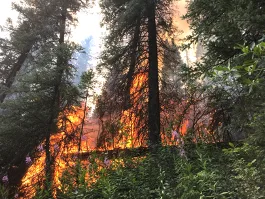
Research shows increasingly frequent, more intense wildfires in the Western U.S. will dramatically shift the landscape over the coming decades, resulting in the conversion of forests to shrublands, grasslands, or hardwood-dominated ecosystems before 2100, but strategies such as prescribed fires…